CONSEJO DE REDACCIÓN DE NEWSRARE
newsRARE
Health technology funding decision processes, in general, and more specifically, for medicines aimed at the treatment of rare diseases (RD), carry a certain degree of risk for health authorities. This is due to the absence of "perfect" information on several relevant aspects, such as the resulting final budgetary impact or real life-effectiveness, partly due to the greater uncertainty associated
with this type of medicines, due to the greater difficulty in conducting clinical trials and generating solid evidence in a standard period of time1,2. Furthermore, the risk associated with the introduction of a medicine for a rare disease is not only borne by the payer, but the pharmaceutical company also faces uncertain-
ties about public reimbursement, timelines, pricing and the volume of product demanded, hence both parties have incentives to agree on risk-reducing financing formulas1,3. Traditionally, the financing of these medicines was based on the establishment of maximum prices for each product, considering aspects such as therapeutic benefit, the target population, the existence of alternatives or the degree of innovation, among others. However, in order to address the existing uncertainties, in recent years some countries have introduced innovative financing models in the field of RDs, as mechanisms to link the financing of these medicines (especially those with higher costs) to the results obtained, whether financial or in terms of improvements in health1–3. The aim of this article is to review the implementation of novel financing schemes to incorporate therapeutic innovation of medicines for RDs in the Spanish National Health System
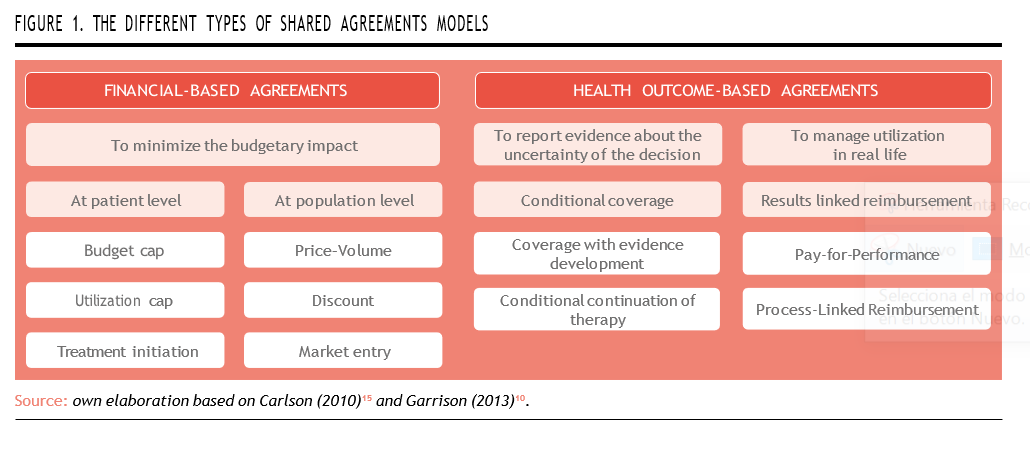
(NHS). To do so, we will describe the main types of existing models in the literature, highlighting their advantages and disadvantages, and then we will exemplify their use in the field of RDs in Spain and Europe. We will also give examples of their application in the field of advanced therapies. Finally, we will analyze the requirements for their implementation and suggest some proposals to reduce the existing barriers to their implementation. TYPES OF MODELS, ADVANTAGES AND DISADVANTAGES Innovative financing models can be divided into two main groups: those based on financial outcomes and those based on health outcomes. In both cases, the objective is to reduce the uncertainty intrinsic to the financing processes, although each type of model aims to mitigate risks of a different nature. Thus, while financial outcome-based models are mechanisms to reduce the uncertainty linked to the bud-
getary impact of the acquisition of the health innovation, health outcome-based models aim to reduce uncertainty about the effectiveness and cost-effectiveness of these medicines (Figure 1)1,4. Models based on financial results Financial performance-based models are commercial contracts that aim to reduce uncertainties related to the budgetary impact. The main types of agreements in this category are described below1,4,5. • Price-volume: These agreements link the price of a medication with its volume of sales, usually by offering a lower unit price for a higher volume of sales. These agreements incentivize manufacturers to not increase their sales beyond what is reasonable, or to ensure that the medication is prescribed only for its approved indications. • Discounts: These agreements involve the manufacturer offe-
FIGURE 1: TYPES OF INNOVATIVE FINANCING MODELS FINANCIAL RESULTS-BASED AGREEMENTS To manage the budgetary impact At the patient level
HEALTH OUTCOMES-BASED AGREEMENTS To provide evidence of decision uncertainty
Source: own elaboration based on Garrison (2013)4 and Carlson (2010)5
ring discounts to the payer on the cost per patient or providing cash back or free delivery of the medication. These models can help to make funding available for medications that would otherwise be excluded from funding due to their high cost. • Budget/cost-capping or utilization/dose-capping: These agreements set a limit on the total cumulative cost or on the utilization of the medication. If these limits are exceeded, the manufacturer may bear all or part of the cost of the treatment. This helps ensure that the actual budgetary impact does not exceed what was initially anticipated by the payer. • Treatment initiation agreements: The manufacturer pays for all or part of the costs of the initial treatment cycle prior to funding the treatment, pending sufficient evidence (efficacy or effectiveness) to convince the payer that their product is worth funding. • Market-share agreements: They are defined by the establishment of a reduced price when the product is first introduced to the market. By doing so, the supplier aims to increase its market share.
• Payment by results: In this type of agreement, the manufacturer makes refunds or price adjustments if its medicine does not meet the initially agreed health outcomes. These outcomes can be measured in terms of final clinical outcomes (mortality, quality of life, etc.), intermediate outcomes (progression-free survival, biomarkers, etc.) or cost-effectiveness (cost per quality-adjusted life year, etc.). • Coverage under evidence-seeking: The funder is responsible for the payment of the medicine conditional on the manufacturer conducting a scientific study that allows for the collection of additional evidence to corroborate its benefits in real practice. In the case of a clinical trial, payment is made to the trial population.
In the case of a larger-scale observational study, payment is made to the entire target population, regardless of whether or not they participated in the study. • Conditional continuation of treatment: For each patient, the payer decides to maintain or withdraw coverage of the medicine based on the level of achievement of a set of short-term clinical outcomes. This ensures that only patients who actually benefit from the treatment will continue to receive it.
Health outcomes-based models Health outcomes-based models are those whereby payment for the medicine is based on the effect on clinical or cost-effectiveness outcomes in actual clinical practice. The main types of arrangements are as follows1,4,5:
• Payment linked to the process of care: Under this type of arrangement, the cost of the technology (e.g. diagnostic test) is reimbursed according to the impact it has on the process of care (e.g. if the use of this test allows the reduction of unnecessary treat-
ments). This type of agreement is used more for health technologies than for medicines. Advantages and disadvantages Innovative funding models are associated to certain advantages.
Provided they are well managed, they can benefit all stakeholders: (i) for funders: reduction of uncertainty, optimization of resource allocation, greater efficiency in actual clinical practice; (ii) for the pharmaceutical industry: increased market access and return on investment, real improvement in effectiveness (incentives for continuous product improvement); (iii) for healthcare professionals: availability of a protocolized agreement based on clinical indicators, allowing the collection of only relevant data; correct selection of patients who need the medicine; (iv) for patients: greater availability of a protocolized agreement based on clinical indicators, allowing the collection of only relevant data; correct selection of patients who need the medicine; and (v) for patients: increased access to high-priced treatments, better monitoring of clinical outcomes, and faster access1,3.
However, there is also evidence of risks and limitations in implementing such models. On the one hand, these arrangements may entail excessive bureaucratic burdens and administrative costs in the first phase, as well as high resources for monitoring and evaluation at a later stage. In addition, their implementation generally requires strong information systems that allow for reliable monitoring of the results achieved. Also, the company commerciali-
zing the innovation may increase prices pending the conclusion of such agreements with the funder, which would make such schemes unattractive. Finally, such contracts may give rise to confidentiality issues due to the need to handle and transfer patients' personal data1,3. However, there is also evidence of the risks and limitations when implementing such models. On one hand, these agreements can entail excessive bureaucratic burdens and administrative costs in the initial phase, as well as significant resources allocated for their monitoring and evaluation in a later stage. Additionally, their deployment typically requires the existence of robust information systems that enable reliable tracking of the obtained results.
Furthermore, the innovation-providing company may adjust prices upward in anticipation of entering into these agreements with the funding entity, which could reduce the attractiveness of these schemes. Finally, these contracts can lead to confidentiality issues due to the necessity of handling and transferring patients' personal data1,3. USE OF ALTERNATIVE FINANCING MODELS FOR RARE DISEASES IN EUROPE Given the low frequency of RDs6, orphan drugs (ODs) generally enter the market with limited clinical evidence due to the low number of patients, and at high prices that do not meet standard cost-effectiveness criteria7. Some studies estimate that by 2024 the cost of ODs could reach $242 billion, representing one-fifth of global drug sales,
with an annual growth rate of 12.3% between 2019 and 2024, which is roughly twice that forecast for the non-orphan drug market8. In this context, ODs are considered ideal candidates for applying innovative financing models, thus allowing for greater efficiency of healthcare systems, especially when negotiations occur at an early stage1,3.
If well managed, innovative financing models can benefit all stakeholders involved
In recent years, the proportion of public spending allocated to ODs has increased in most European countries, which has sparked a great interest in agreeing on new reimbursement criteria and conditions, mainly based on economic and efficiency issues 10. A review carried out by Morel et al. in 2013, which identified 42 risk-sharing agreements (RSAs) for 26 ODs implemented between 2006 and 2012 in five European countries (Belgium, Italy, the Netherlands, Sweden, and the United Kingdom), found that 55% of these agreements were based on health outcomes, mostly in the form of coverage with evidence development. On the other hand, among the agreements based on financial outcomes, discounts were the most frequently used form (approximately 70%). Italy had the highest number of agreements of this type, followed by the Nether-
lands and England, and oncologic drugs were the main targets of the RSAs11. However, nowadays, the information regarding these new financing approaches in the context of ODs is limited. Regarding the accumulated experience and transparency of the results obtained, the information provided in Australia, England, and Italy should be positively highlighted12. The experience of the British NHS is perhaps one of the best documented, with funding schemes equivalent to RSAs called Patient Access Schemes (PAS). As of 2021, the NHS had 329 funding agreements in place for mostly oncology medicines, of which at least 57 were with orphan drugs, accounting for approximately one-fifth of the total13 (Figure 2).
The vast majority of these are simple agreements consisting of applying a discount on the unit cost per patient, thus aligning with the recommendations of the National Institute for Health and Care Excellence (NICE). This has enabled the financing of very recent drugs such as fenfluramine (Fintepla®) for the treatment of seizures associated with Dravet syndrome in children aged 2 years and older, and imlifidase (Idefirix®) for the desensitization treatment prior to kidney transplantation in people with chronic kidney disease13. Others, however, access the NHS through more complex funding schemes, such as Managed Access Agreements (MAA), which allow a medicine to be made available for a limited period of time at a discounted price while
FIGURE 2. NUMBER OF ORPHAN DRUGS FUNDING AGREEMENTS IN THE UK UP TO 2021 (N=57)
�Patient Access Schemes (simple discount) Managed Access Agreements (MAAs) Commercial access agreements (CAAs)
Source: prepared by the authors based on NICE13
more data is gathered on its effectiveness in real-world practice; or Commercial Access Agreements (CAA), which enhance the value proposition of a medicine and can be addedd to a simple discount. An example of such an agreement is nusinersen (Spinraza ®), indicated for the treatment of 5q spinal muscular atrophy, for which the agreement will run for 5 years, from 24 July 2019 (when the agreement was signed) until 23 July 2024, with a data collection period of at least 3 years13,14 which will address long-term uncertainties 15.In any case, the NHS reports that the utilization of such agreements in the field of ODs is very widespread, and that they have saved the NHS nearly £196 million between 2019 and 202016. Another example of RSA implementation is Italy, with a powerful system of national registries managed by the Italian Medicines Agency (AIFA) 17,18. In this country, the first RSA for ODs was signed in 2006, and by 2012, 24 such agreements were already in place, mostly for ODs in the area of
oncology 17. In this respect, Xoxi et al. (2021) 17 have carried out an analysis of AIFA indication-based registrations and associated information from the European Medicines Agency (EMA) over a 15-year period (2005-2019), assessing their characteristics and comparing ODs against other medicines for both oncology and non-oncology indications17.
The high uncertainty, together with the high price of orphan drugs, tends to promote the use of risk-sharing agreements
According to their analysis, out of the 283 existing records, 182 correspond to suitability records (35.2% referring to ODs, with a very similar distribution between oncology and non-oncology), 35 include agreements based on financial
results (with 20% referring to ODs, 2 non-oncology, and 5 oncology), and 60 refer to payment by results agreements (23.3% corresponding to ODs, 4 non-oncology, and 10 oncology)16 (Figure 3). In addition, in Italy there are two types of outcome-based RSAs: Payment by Results (PbR), which provides for reimbursement of 100% of the cost of the drug for responding patients (which in practice has allowed reimbursement of drugs such as Adcetris®, Blincyto®, and Holoclar®, among others); and Payment at Result (PaR), which involves reimbursement only when the treatment is successful, after starting with a free supply or an upfront payment (to which very novel therapies, such as Kymriah and Yescarta, have subscribed)17. In the rest of Europe, innovative financing approaches have also been applied in ODs, although detailed information is limited.
For example, in France, since 2008, specific agreements with clawback mechanisms above agreed levels have been applied to ODs, with eculizumab (Soliris®) and galsulfase (Naglazyme®) being the first drugs to benefit from this (interestingly, Naglazyme® has lost the ODs designation)18. Despite the lack of available information, it is clear that the high uncertainty, together with the high price of ODs tends to promote the use of RSAs. The most recent example is the treatment of metachromatic leukodystrophy with a drug on the market, Libmeldy® (atidarsagen autotemcel), which has a price tag of around 2.5-3 million euros per patient. Countries such as Germany, Italy, and the United Kingdom have
FIGURE 3. EVOLUTION IN THE IMPLEMENTATION OF RISK-SHARING AGREEMENTS IN ITALY, 2005-2019
Abbreviations: RSA: Risk-sharing agreement Source: Xoxi (2021)17
signed funding agreements recognizing the real efficacy of the drug. In Germany, for example, a purchase price of 2.48 million euros per child has been negotiated, according to information from the laboratory itself19. THE CASE OF ADVANCED THERAPY MEDICINAL PRODUCTS Advanced therapy medicinal products (ATMPs) serve as a paradigmatic example of how RSAs can ensure access to innovative thera-
pies with high costs and uncertainty about their effectiveness. They are an emerging class of medicines based on genes (gene therapy), tissues (tissue therapy), or cells (cell therapy) that have the potential to radically change the treatment of very serious or chronic diseases with no therapeutic alternatives. To date, approximately 20 advanced therapies have been approved by the EMA, and many more are currently under investigation20. In this regard, two recently published reviews by Jorgensen et al.
(2020) 21 and Ronco et al. (2021)22 showed how the reimbursement procedure for ATMPs is carried out in 5 European countries (Italy, France, United Kingdom, Germany, and Spain), finding that only chimeric antigen receptor T-cell (CAR-T) therapies Kymriah® and Yescarta® were reimbursed relatively homogeneously in all of them (Table 1). Thus, while in France and the UK reimbursement for these drugs, indicated for certain tumor types, is subject to additional data collection and conditional on future re-evaluations, in the other countries reimbursement (Germany) or tiered payments (Italy and Spain) are linked to the results obtained for each patient. The procurement of these therapies by state governments costs approximately 300,000 euros per successful patient. In addition, in France, a fixed supplement of 15,000 euros was added to the current Diagnosis-Related Group (DRG) system fee21,22.
However, the reimbursement of ATMPs at the national level, like that of other drugs, appears to be highly heterogeneous throughout Europe, which can be explained by the healthcare organization of the different countries under study: – In Italy and Spain, a very similar financing system for ATMPs is observed, based mostly on payment for results, as we mentioned before. In this way, in Italy, Holoclar® and Strimvelis® have been acquired for an amount of €95,000 and €594,000, respectively21; therapies that were not financed in Spain22. On the contrary, Alofisel® is funded in Spain, although with restrictions on the authorized indication23. In this case, a payment-by-results agreement was
TABLE 1. ATMPS FUNDING SCHEMES IN THE EU-5 (ITALY, UK, FRANCE, GERMANY AND SPAIN) COUNTRY ATMP
€1,858/vial (excluding confidential discount)
€1,220.52 Not funded by (after resolution negotiation)
Funded with restrictions for both indications (LBDCG and ALL)
Funded with restrictions for both indications (LBDCG and LBPM)
ASMR IV €297,666 for LBDCG; + €15,000 ASMR III above DRG for LLA
Payment €327,000, CDF by results discount (MAA, CAA)
Payment €320,000 CDF by results (discount (MAA, for CAA) LBDCG)
Abbreviations: ASMR: Amélioration du Service Médical Rendu; ATMP: Advanced Therapy Medicinal Product; CAA: Commercial Access Agreements, CDF: Cancer Drug Funds; DRG: Diagnosis Related Group; LBDCG: Diffuse Large B-cell Lymphoma; LLA: Acute Lymphoblastic Leukemia; MAA: Managed Access Agreements; NUB: Neue Untersuchungs-und Behandlungsmethoden, extra budgetary reimbursement; PAS: Patient Access Scheme; RSA: Risk sharing agreement Source: own elaboration based on Jørgensen (2020)21 y Ronco (2021)22
reached for a total of €60,00022, and an annual review of sales and fixed prices was agreed upon to ensure that they are within legally established parameters and, if not, to proceed with the corresponding price reduction24. – United Kingdom has a similar situation. There, ATMPs have been acquired through PAS, sometimes with confidential discounts.
– In the case of France, reimbursement of ATMPs has been carried out through the assignment of therapeutic benefit (SMR, which consists of 4 levels and 5 criteria) and added therapeutic value of the drug (ASMR, which is a 5-level system, where level I represents the highest added value). In this sense, reimbursement for Alofisel® was 10% cheaper than in Spain and therapies such as
Holoclar ® and Spherox ® were fully reimbursed by the DRG22. – Finally, in Germany, an extrabudgetary reimbursement (NUB, Neue Untersuchungs-und Behandlungsmethoden, new examination and treatment method) has been requested for all ATMPs with financing agreement. This is possible when a drug is used in the hospital
setting and its price is not fully covered by a DRG fee.
sed by health authorities, media, and other stakeholders.
This example shows that there is no single approach to reimbursement and access to ATMPs in the European Union, which undoubtedly poses a huge challenge. However, the available evidence so far allows us to conclude that25:
At the national level, the Spanish Ministry of Health has echoed on several occasions the importance of applying payment for results agreements to reduce uncertainty in clinical and budgetary impact, measuring results in clinical practice and evaluating compliance in each patient so that the National Health System only pays the full price of the medicine in those patients where the treatment achieves the expected therapeutic goal26,27.
• ATMPs can be profitable at the high prices set by manufacturers. • The economic evaluation framework adopted by many payers undervalues these therapies, which negatively impacts patient access. • ATMPs can be affordable and may not require deferred payments. • Outcomes-based agreements can be challenging to implement in real-world practice. • The profitability of ATMPs depends on the type of agreement and payment approach. • Greater collaboration between different countries would allow for better management of reimbursement and access to ATMPs
EXAMPLES OF INNOVATIVE FINANCING MODELS FOR RD IN SPAIN In Spain, concern for the sustainability of the healthcare system has also promoted the adoption of different schemes for the ODs financing, although their confidential nature prevents a detailed analysis of them, so we have to limit ourselves to the information collected in the available literature and that disclo-
The Spanish Ministry of Health has recognized the importance of implementing payment by results agreements to reduce uncertainty regarding the clinical and budgetary impact
In 2019, VALTERMED was created, a shared information system within the National Health System that allows measuring the health outcomes achieved by publicly financed latest-generation medicines, in order to share real information and improve the efficiency of the system. The medicines included in VALTERMED are high-cost drugs that are generally subject to payment for results agreements. The first one was CAR-T tisagenlecleucel (with OD designation), which was the subject to an innovative financing agreement28 of 327,000, with a first
payment of 50% once the drug infusion was completed and a second payment at 18 months of treatment based on the response obtained in terms of overall survival22,29. Currently, 79% of the drugs included in VALTERMED (11 out of 14 in total) are ODs, for which a pharmacoclinical protocol is developed and monitoring is carried out through the system. Eight of them are financed through a health outcomes-based risk-sharing agreement, and three through a financial outcomes-based RSA (supply at lower cost, maximum cost per patient, cost ceiling) 28 (Table 2). Regional health authorities have also been proactive in making innovative financing agreements for ODs. Catalonia has been one of the most active autonomous communities in this regard.
In fact, during the period 2016-2019, the Catalan Health Service (CatSalut) launched 3 RSAs (still in force) involving ODs, which represents 20% (3/15) of all agreements signed during that period30. These drugs would be intended to meet therapeutic needs in the respiratory, gastroenterology and nephrology fields (the disease for which they would be indicated has not been disclosed in order to avoid the identification of the drug) and were financed, at the regional level, through financial outcomes-based agreements (specifically, price-volume agreements and annual budget limits)30, although it has not been possible to obtain more information about them. However, in Spain, most of the RSA agreements are signed in the hospital setting. In this regard, a survey of 80 members of the Spanish Society of Hospital Pharmacy (SEFH)
TABLE 2. LIST OF ODS INCLUDED IN VALTERMED AND FINANCED IN SPAIN THROUGH RISK-SHARING AGREEMENTS ACTIVE INGREDIENT Tisagenlecleucel
1,2×10⁶-6,0×10⁸ cells dispersion for perfusion
Refractory or relapsed B-cell acute lymphoblastic leukemia (ALL)
Relapsed or refractory diffuse large B-cell lymphoma (DLBCL)
SPECIAL FINANCING CONDITIONS – Risk groups – Pharmacoclinical protocol – �Patient registration: risk sharing/payment by results – Follow-up – Provision to certain patients free of charge
1 mg powder for concentrate for solution for infusion
Recurrent or refractory CD22-positive B-lymphocyte precursor acute lymphoblastic leukaemia (ALL)
– Pharmacoclinical protocol – �Patient registration: risk sharing/payment by results – Follow-up – Provision to certain patients free of charge
Complex perianal fistulas in patients with Crohn's disease
– Pharmacoclinical protocol – Risk sharing/payment by results – Follow-up
– Pharmacoclinical protocol – Follow-up – Lower cost supply
– Maximum cost per patient – Pharmacoclinical protocol – Risk sharing/payment by results – Follow-up
5×10¹² vector genomes /ml concentrate and solvent for solution for injection
Retinal dystrophy associated with RPE65 mutation
· Protocolo – Follow-up – Expenditure ceiling
2 mg/ml concentrado para solución para perfusión
Manifestaciones no neurológicas de la mucopolisacaridosis VII (síndrome de Sly)
· �Coste máximo por paciente · Protocolo · Seguimiento
30/140 mg powder for concentrate for solution for infusion
Relapsed or refractory LBDCG and in combination with bendamustine and rituximab
– Faramacoclinic protocol – Risk sharing/payment by results – Follow-up
2×10¹³ vector genomes /ml solution for infusion
– Price/volume agreement – pharmacoclinical protocol – Risk sharing/payment by results – Follow-up
250 mg solution for injection in prefilled syringe
– Maximum cost per patient – Pharmacoclinical protocol – Risk sharing/payment by results
showed that the level of implementation of RSA in Spanish hospitals is high, as more than 90% declare that they are currently linked to this type of contract with the pharmaceutical industry and express their intention to renew or sign new ones31. Moreover, more than 60% of respondents prioritize innovative models based on payment for efficacy/efficiency in the case of agreements for rare diseases or orphan drugs31. Specifically, Edo-Solsona et al. (2020) 32 recently shared the first experience of pay-for-performance in a Spanish reference hospital (La Fe Hospital in Valencia) involving ODs for congenital metabolic diseases through a risk-sharing program for enzyme replacement therapies (ERT) in lysosomal storage diseases (LSD)32 that result in physical deterioration, decreased functional capacity, and potentially death33.
In this program, 8 patients (3 women and 5 men) with different LSDs were included: 4 patients with Hurler disease (mucopolysaccharidosis) who were treated with laronidase, 2 patients with Pompe disease (glycogenosis) who were given alglucosidase, and 2 patients with Gaucher disease (sphingolipidosis) who were treated with imiglucerase32. When establishing the agreement, the variables and criteria for response to treatment were defined for each ERT, selected according to the experience of the practitioners and the available evidence (Table 3)32. Thus, for example, the effectiveness of laronidase was evaluated through the reduction in the excretion of glycosaminoglycans in urine, the improvement of pulmonary, hepatic and splenic capacities, and depending on how much the natural progression of the disease
decreased, at one and two years of treatment32.
certain costs and administrative burden that can limit their use.
It should be noted that, so far, the authors indicate that the economic impact of implementing the ERT program on patients has been very limited, as the treatments have shown full effectiveness after two or three years of follow-up, and in this case, the hospital proceeded to full payment for all therapies administered 32 . This example, the only one published in detail so far for a rare disease in Spain, highlights the need to increase the evaluation and transparency of agreements made.
In any case, the decision to introduce an innovative financing model should take into account various aspects, such as the level of risk assumed, who bears it, what longterm effects it may entail, how the degree of achievement of results can be measured and quantified, who will analyze them, and who will manage them.
To maximize the potential advantages of these models for the future, the objectives of the agreement must be clearly defined, detailing the duties and obligations of the parties involved
CONCLUSIONS AND RECOMMENDATIONS FOR MAXIMIZING BENEFITS Financing agreements for pharmaceutical innovations have become a common practice in healthcare systems when the price of the drug is high and there is uncertainty about its clinical and/or financial outcomes, which applies to a large portion of ODs. These agreements allow for risk-sharing and accelerate patient access to treatments, although their implementation also entails
On the other hand, to maximize the potential benefits of these models for the future, it would be important to consider the following considerations. First, the objectives of the agreement must be clearly defined, detailing the duties and obligations of the parties involved. In this regard, it is recommended to jointly develop the agreement between the funder and the pharmaceutical company, including a deliberative process on how decisions will be linked to the results obtained. Second, it is imperative to orient these models towards the patient, also defining what is meant by therapeutic success and which (intermediate and final) measurement variables would be most appropriate. In turn, the process should be simplified, managing the models correctly to avoid a high administrative burden.
Third, it is recommended to analyze their long-term impact, creating records and monitoring systems for the results that allow real-time tracking. Finally, for these models to be successful, it is necessary to provide the healthcare system with adequate material and human resources for their proper management, as well as to raise awareness about the importance of having an evaluative culture of innovation.
TABLE 3. EFFICACY AND RESPONSE CRITERIA IN THE RISH-SHARING PROGRAM FOR ENZYME REPLACEMENT THERAPIES FOR LYSOSOMAL STORAGE DISEASES Hurler's disease Laronidase treatment (n=4) First year of treatment Efficacy criteria
Primary: • Decreased urinary excretion of GAGs Secundary: • Improvement of respiratory tests (polysomnography and CVF) • Age-related increase in liver and splenic volume • Interruption of the natural progression of the disease
• Total: GAG excretion >40%. • Moderate: GAG excretion between 25-40%. • Mild: GAG excretion <25%.
• Stabilisation or increase <5% of urinary GAGs • Improvement or non-progression in respiratory tests • Increased liver and splenic volume • Interruption of the natural progression of the disease
• Total: the patient meets all 4 criteria above • Moderate: the patient does not meet any of the above criteria
Pompe disease Alglucerase treatment (n=2) Efficacy criteria
• Measurement of muscle strength • 6-minute walk test • Forced vita capacity in seated and decubitus position
• Total: Annual impairment <10% • Moderate: Annual deterioration between 10-20% on some criteria • Mild: Annual deterioration between 10-20% • No responsive: annual deterioration >20% Gaucher disease Imiglucerase treatment (n=2) Adult patient Second year of treatment
• Normalization of plasma haemoglobin levels • Normalization of plasma platelet levels • Normalization of liver and splenic volume • Reduction or remission of bone pain • Maintenance of normal bone mineral density • Absence of progression of the bone lesion present
• Complete: the patient meets ≥4 of the above criteria • Moderate: the patient meets 3 of the above criteria • No responsive: patient meets ≤2 criteria above Paediatric patient First and second year of treatment
Primary: • Increase in plasma haemoglobin levels to normal for age • Increase in plasma platelet levels to normal for age • Avoiding splenectomy (removal of the spleen) • Reduction of hepatosplenomegaly to avoid disease symptomatology Secundary: • Adequate growth following its growth curve • Absence of pain or osteonecrosis • Reduction of chitotriosidase enzyme and/or cytokine CCL18/PARC levels by 10%. • Total: patient meets 3 of the above primary criteria • �Moderate: the patient meets 2 of the primary criteria and 2 of the secondary criteria above • �Mild: the patient meets 1 of the primary criteria and ≤3 of the secondary criteria above
Abbreviations: CVF: forced vital capacity; GAG: glycosaminoglycans Source: Edo-Solsona (2020)32
Abellán JM, Garrido S, Martínez JE, Sánchez FI. Evidencia de los acuerdos de riesgo compartido como fórmula de cobertura de nuevas tecnologías sanitarias. Grupo de Investigación en Economía de la salud y evaluación económica. Departamento de Economía Aplicada. Universidad de Murcia [Internet]. 2010. Available from: https://sms.carm.es/somosmas/documents/63024/0/ACUERDOS+RIESGO+COMPARTIDO.pdf/89dcfc0f-2e3e-4f27-8b79-f80a688a74ae
Espín J, Oliva J, Rodríguez-Barrios JM. Esquemas innovadores de mejora del acceso al mercado de nuevas tecnologías: los acuerdos de riesgo compartido. Gac Sanit. 2010;24(6):491–7.
Garrison LP, Towse A, Briggs A, de Pouvourville G, Grueger J, Mohr PE, et al. Performance-based risk-sharing arrangements-good practices for design, implementation, and evaluation: report of the ISPOR good practices for performance-based risk-sharing arrangements task force. Value Health J Int Soc Pharmacoeconomics Outcomes Res. 2013;16(5):703–19.
logy of Rare Diseases: A Cross-Sectional Study in Italy in the Years 2014-2019. Front Med. 2022;9:820757. 9.
Nuijten M, Van Wilder P. The impact of early phase price agreements on prices of orphan drugs. BMC Health Serv Res. 2021 Mar 12;21:222.
10. Brenna E, Polistena B, Spandonaro F. The implementation of health technology assessment principles in public decisions concerning orphan drugs. Eur J Clin Pharmacol. 2020;76(6):755–64.
Puig-Junoy J, Meneu R. Aplicación de los contratos de riesgo compartido a la financiación de nuevos medicamentos. Ges Clin Sanit. 2005;7:88–94.
11. Morel T, Arickx F, Befrits G, Siviero P, van der Meijden C, Xoxi E, et al. Reconciling uncertainty of costs and outcomes with the need for access to orphan medicinal products: a comparative study of managed entry agreements across seven European countries. Orphanet J Rare Dis. 2013;8:198. 12. Fundación Gaspar Negrín. Libro Blanco de las enfermedades raras en España. 2018. 13. National Institute for Health and Care Excellence. Patient Access Schemes Liaison Unit | What we do | About [Internet]. NICE. NICE; [cited 2022 Aug 4]. Available from: https://www.nice.org.uk/about/what-wedo/patient-access-schemes-liaison-unit
Carlson JJ, Sullivan SD, Garrison LP, Neumann PJ, Veenstra DL. Linking payment to health outcomes: a taxonomy and examination of performance-based reimbursement schemes between healthcare payers and manufacturers. Health Policy Amst Neth. 2010;96(3):179–90.
14. Spinal Muscular Atrophy UK. Managed Access Agreement FAQs – [Internet]. [cited 2022 Aug 4]. Available from: https://smauk.org.uk/managed-access-agreement-faqs 15. Blonda A, Barcina Lacosta T, Toumi M, Simoens S. Assessing the Value of Nusinersen for Spinal Muscular Atrophy: A Comparative Analysis of Reimbursement Submission and Appraisal in European Countries. Front Pharmacol. 2022 Jan 21;12:750742.
Richter T, Nestler-Parr S, Babela R, Khan ZM, Tesoro T, Molsen E, et al. Rare Disease Terminology and Definitions-A Systematic Global Review: Report of the ISPOR Rare Disease Special Interest Group. Value Health J Int Soc Pharmacoeconomics Outcomes Res. 2015;18(6):906–14.
Iskrov G, Stefanov R. Post-marketing access to orphan drugs: a critical analysis of health technology assessment and reimbursement decision-making considerations. Orphan Drugs Res Rev. 2014;1.
16. National Heatlh Service in England. Patient Access Scheme(s) Project [Internet]. [cited 2022 Aug 4]. Available from: https://www.lpp.nhs.uk/categories/ medicines-optimisation-pharmacy-procurement/medicines-procurement/patient-access-scheme(s)-project/
Villa F, Di Filippo A, Pierantozzi A, Genazzani A, Addis A, Trifirò G, et al. Orphan Drug Prices and Epidemio-
17. Xoxi E, Facey KM, Cicchetti A. The Evolution of AIFA Registries to Support Managed Entry Agreements for
CES REFER Orphan Medicinal Products in Italy. Front Pharmacol. 2021;12:699466.
de decisiones sobre la mejor opción terapéutica para los pacientes [Internet]. 2019 [cited 2022 Aug 23]. Available from: https://www.sanidad.gob.es/gabinete/notasPrensa.do?id=4697
18. Adamski J, Godman B, Ofierska-Sujkowska G, Osinska B, Herholz H, Wendykowska K, et al. Risk sharing arrangements for pharmaceuticals: potential considerations and recommendations for European payers. BMC Health Serv Res. 2010;10:153.
27. Redacción Médica. El nuevo pago de fármacos por resultados es “igualitario e individualizado” [Internet]. Redacción Médica. [cited 2022 Aug 23]. Available from: https://www.redaccionmedica. com/secciones/industria/el-nuevo-pago-de-farmacos-por-resultados-es-igualitario-e-individualizado–1677
19. Orchard Therapeutics Reports First Quarter 2022 Financial Results and Highlights Recent Commercial Progress | Orchard Therapeutics [Internet]. [cited 2022 Aug 4]. Available from: https://ir.orchard-tx.com/ news-releases/news-release-details/orchard-therapeutics-reports-first-quarter-2022-financial/
28. Ministerio de Sanidad. Sistema de Información para determinar el Valor Terapéutico en la Práctica Clínica Real de los Medicamentos de Alto Impacto Sanitario y Económico en el SNS (VALTERMED) [Internet]. 2022 [cited 2022 Aug 4]. Available from: https://www. sanidad.gob.es/profesionales/farmacia/valtermed/ home.htm
20. EMA. Advanced therapy medicinal products: Overview [Internet]. European Medicines Agency. 2021 [cited 2022 Apr 4]. Available from: https://www.ema. europa.eu/en/human-regulatory/overview/advanced-therapy-medicinal-products-overview
29. Consejo de Transparencia y Protección de Datos de Andalucía. Resolución 340/2021, de 27 de mayo [Internet]. [cited 2022 Aug 23]. Available from: https:// www.ctpdandalucia.es/sites/default/files/resoluciones/res-340-2021.pdf
21. Jørgensen J, Hanna E, Kefalas P. Outcomes-based reimbursement for gene therapies in practice: the experience of recently launched CAR-T cell therapies in major European countries. J Mark Access Health Policy. 2020;8(1):1715536.
30. Guarga L, Gasol M, Reyes A, Roig M, Alonso E, Clopés A, et al. Implementing Risk-Sharing Arrangements for Innovative Medicines: The Experience in Catalonia (Spain). Value Health J Int Soc Pharmacoeconomics Outcomes Res. 2022;25(5):803–9.
22. Ronco V, Dilecce M, Lanati E, Canonico PL, Jommi C. Price and reimbursement of advanced therapeutic medicinal products in Europe: are assessment and appraisal diverging from expert recommendations? J Pharm Policy Pract. 2021;14(1):30.
31. Lorente R, Antonanzas F, Rodriguez-Ibeas R. Implementation of risk-sharing contracts as perceived by Spanish hospital pharmacists. Health Econ Rev. 2019;9(1):25.
23. Ministerio de Sanidad. Buscador situación financiación medicamentos (BIFIMED) [Internet]. 2022 [cited 2022 Aug 8]. Available from: https://www.sanidad. gob.es/profesionales/medicamentos.do
32. Edo-Solsona MD, Vitoria-Miñana I, Poveda-Andrés JL. Implementation and results of a risk-sharing scheme for enzyme replacement therapy in lysosomal storage diseases. Farm Hosp Organo Of Expresion Cient Soc Espanola Farm Hosp. 2020;44(1):10–5.
24. Ministerio de Sanidad. Acuerdos de la Comisión Interministerial de Precios de Medicamentos (CIPM). 25. Simoens S, De Groote K, Boersma C. Critical Reflections on Reimbursement and Access of Advanced Therapies. Front Pharmacol. 2022;13:771966.
33. Ratko TA, Marbella A, Godfrey S, Aronson N, Ratko TA, Marbella A, et al. Terapias de reemplazo de enzimas para enfermedades de almacenamiento lisosomal. Agencia para la Investigación y la Calidad de la Atención Médica (EE. UU.); 2013.
26. Ministerio de Sanidad. Nota de Prensa. Carcedo: Valtermed permitirá generar información para la toma