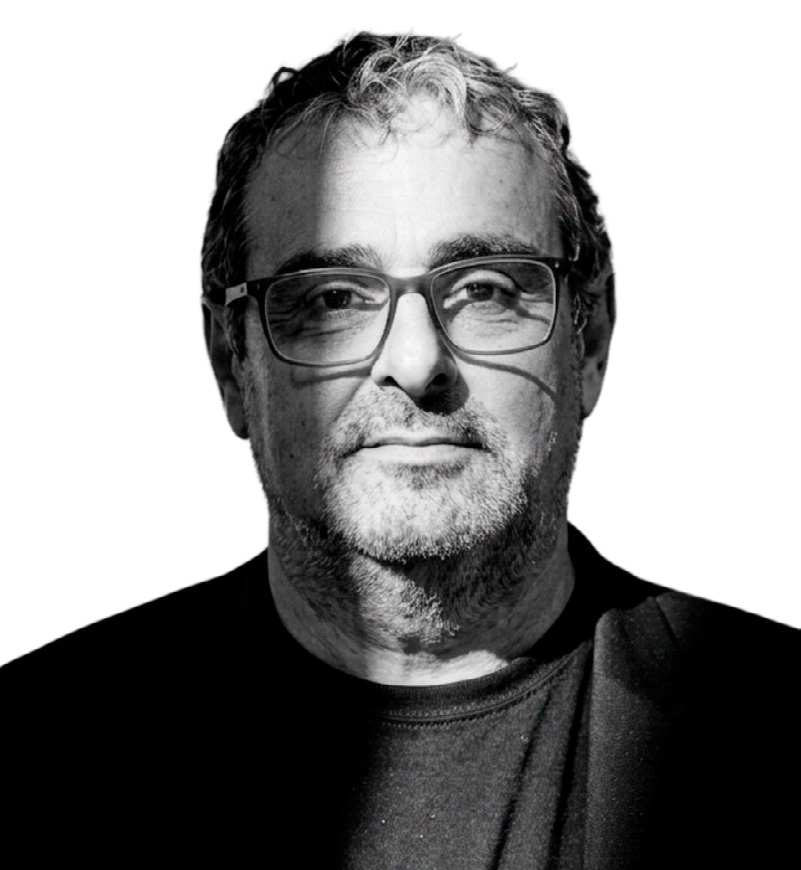
KACPER RUCIŃSKI
SMA Europe
KR: This is such a concise question, and yet the answer feels so elusive! The fundamental challenge is linked to the disparities between countries not only as regards screening for SMA but, essentially, as regards newborn screening in general. As mentioned, there are countries in Europe that screen newborn babies for only one or two disorders, and there are countries that screen newborns for nearly 50 disorders. How is such a disparity possible? Historically, national screening programs developed independently over decades. Unlike in the United States where there’s a federal screening panel in place, to-date little has been done in Europe to ensure even minimal alignment between a multitude of screening programs, some of which are run on a province level. Currently, we face the reality of some children in Europe going undiagnosed and developing life-limiting diseases while other children, properly tested at birth, receive timely medical care and live symptom-free – only because they were born a few kilometers down the road.
born screening programs in the developed world. Then, lower-middle income countries often give priority to other healthcare needs, while smaller countries frequently do not have sufficient expertise or capacity to embark on mass genetic testing. In the EU, the Alliance asks the European Commission to take a leadership role in driving the policy and helping member states to align their national newborn screening programs. Outside the EU, we support national organizations that advocate for SMA newborn screening with their respective governments. Whether we’ll get there in 2025, it remains to be seen; we are on a good track, but as long as even a single child is left behind untested, our efforts will continue. Can you share any success stories or case studies where early diagnosis through newborn screening has significantly impacted the lives of children with SMA?
KR: Today, seven in ten babies born in Europe are tested for SMA at birth, which means that hundreds of children every year will develop in full health, never experiencing symptoms of this terrible disease. Each child is a success story – a success for the screening lab, for treating clinicians, for the society, and of course for the child.
Such health inequalities in the 21st-century Europe are shocking. We aim to raise awareness among decision-makers not only within the EU institutions but also across the European continent. Robust neonatal diagnostic to prevent severe disorders is not simply a matter of healthcare. Being often a difference between life and disability or death, I believe it is a matter of equality and basic human rights.
Can you imagine the difference between living with a severe lifelong disability, never being able to stand and walk, and living a life in full health? This is precisely the miracle of newborn screening in SMA.
What are the expected challenges in implementing universal newborn screening for spinal muscular atrophy across all European countries by 2025? KR: When referring to European countries, it helps to distinguish between states members of the European Union and those outside of it. Primarily, European Union is built on the idea of harmonization. People are expected to enjoy the same rights as EU member states are encouraged to align their policies with each other. Even though healthcare has been explicitly left out of the EU treaties, political goodwill can go a long way, as we have seen with the EU health strategy and its various components, such as the European Medicines Agency, European Reference Networks, or EU pharmaceutical legislation. Besides, EU is still a relatively wealthy region. All this encourages us to focus our efforts on EU institutions, in search of a shared solution to what ultimately is a burning public health problem.
Let me add that introducing newborn screening in a country is not as complex as some say. We have observed countries implement it swiftly, where it took barely a few months between decision and implementation: Austria, Czechia, Denmark, Norway, Poland, Switzerland. Ukraine expanded its national newborn screening program, by adding SMA and 16 other disorders, in late 2022, in the midst of war. Geographical challenges did not prevent Russia and Turkey from implementing nationwide screening for SMA incredibly quickly. Russia actually now screens more babies and for more disorders than any other country, second only to the United States, the global leader. There is abundant knowledge and wealth of experience across the world, there are rapid screening tests available on the market, there are successful models that can be replicated.
In contrast, countries outside the EU are either less welloff or – perhaps with the notable exception of Norway – often reluctant to align with anyone. UK or Switzerland, for instance, have been traditionally unwilling to incorporate foreign expertise and thus have the most rudimentary new-
The European Alliance for Newborn Screening in SMA works to promote this knowledge and to convince health authorities that preventing this terrible disease is doable, is simple, is cost effective, and indeed is an absolute necessity.