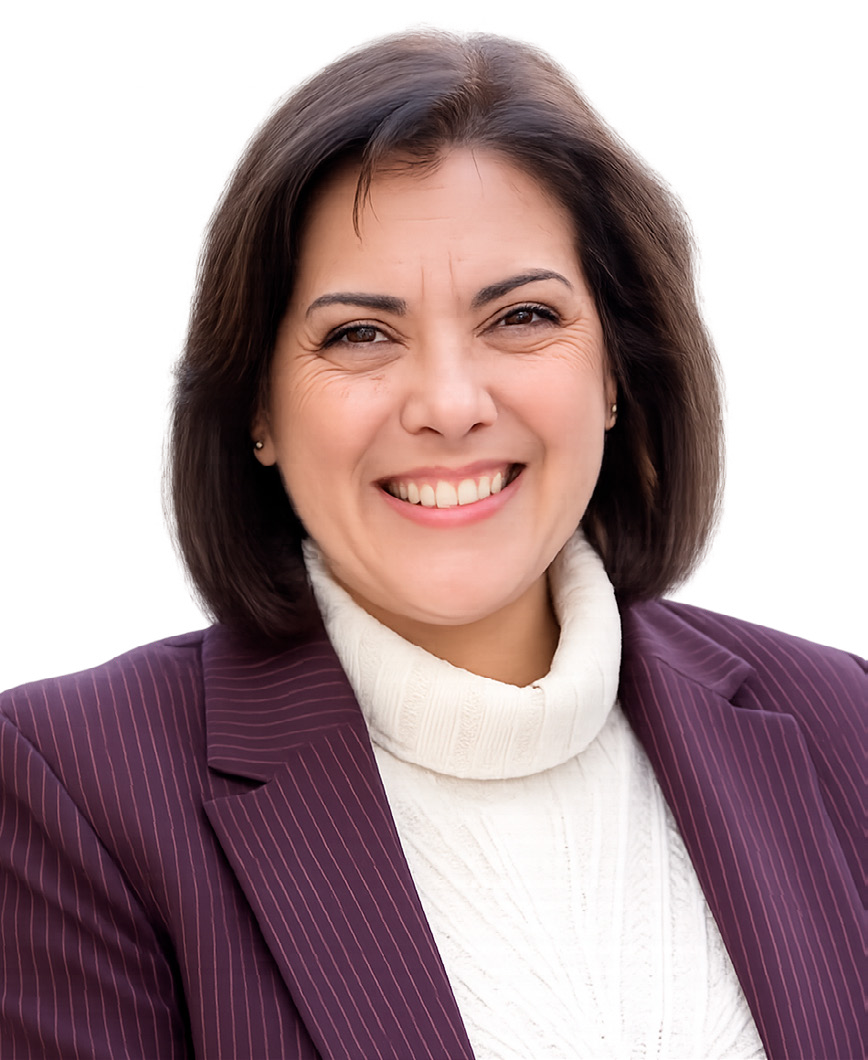
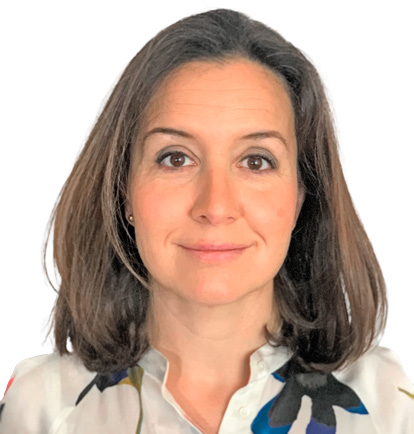
TINA TAUBE
EFPIA
TT: When discussing how to effectively address rare diseases there are essentially three areas to consider. First, with the current legislative review, we propose concrete revisions for the OMP regulation to strengthen the legislative framework and enhance support for orphan medicinal products. We need to consider how to encourage innovation, particularly through incentives like market exclusivity.
Our industry is also proposing a system for Europe where the Less than 5 % of rare countries who can afford to pay diseases have an less for medicines, pay less – a approved treatment, One of our clear commitments at concept called equity based tier and many diseases with EFPIA is to propose that our mempricing.
This type of agreement bers file for pricing and reimbursewould require solidarity among approved treatments ment applications in all European Member States to embed thestill significantly impair countries no later than two years se ‘fair principles’ and prevent patients' life expectancy, after marketing authorization has them from being undermined, quality of life, or daily been granted for a medicines, if a for example, through internatioMember State allows it. nal reference pricing or through functioning supply diversion, where a mediWe have created a European cine sold more cheaply in one access portal where authorization holders can provi- country is immediately exported to a country with de information regarding pricing and reimbursement higher prices. applications in the 27 European countries.
This portal includes reasons for any delays in pricing and reimbur- In addition, at the European level, the implementation sement decisions or why the marketing authorization of the EU Health Technology Assessment (HTA) reguholder has not filed in a particular market, aiming to lation, which will become effective at the beginning increase transparency about access challenges, which of 2025, and is an important legislative measure to vary from country to country. Understanding these cha- address some of the access challenges we see in the llenges is crucial to addressing them. European Union. we published a joint statement on patient access to medicines for rare diseases.
Empowering the CDG Community: Collaborative Efforts, Research, and Advocacy for a Brighter Future Vanessa Ferreira President and Founder of the Portuguese Association for CDG and Other Rare Metabolic Disorders (APCDG-DMR)
What motivated you to found the APCDG-DMR and what has been the journey since its creation? VF: The biggest motivation is the fact that my sister was born with congenital disorders of glycosylation (CDG), and she is the main inspiration behind all our work in the field of advocacy. This motivation extends not only to my sister but also to all the other children, teenagers, and adults living with CDG. From early on, I had a strong desire to connect with other families for more support and awareness about CDG. We realized that the community was quite dispersed and there was an enormous lack of information and support for families dealing with CDG. We identified many needs, and it became clear that a patient group like APCDG could help overcome these challenges. I must say that the journey since the early days of the creation of the Portuguese Association for CDG has been full of challenges.
Initially, it was not easy to gain recognition or establish a solid organization, as a nonprofit association requires many resources, time, and dedication. These were significant challenges for us. What kind of support and guidance does the APCDG-DMR offer to families facing a diagnosis of Congenital Disorder of Glycosylation (CDG)? VF: We offer various forms of support and guidance through several major activities we have initiated with many other partners. One of the most important activities is the World Conference for CDG. This conference provides indirect support and guidance for families as it is community-driven, using different methodologies to listen to the needs of the community. When I refer to the community, I mean families, researchers, medical doctors, and a few companies interested in the field.
This conference is one of the major platforms for families to access up-to-date information on CDG, including current care and management options. It also connects families with medical experts and specialists in CDG and facilitates connections between different patient groups representing the CDG patient voice worldwide. This platform allows for the exchange
time, we've achieved substantial outreach metrics. During the World CDG Awareness Day, we disseminate a lot of information about CDG, which helps raise awareness significantly.
of information and peer-to-peer support. In addition to the conference, we provide extensive information in lay language to help families better understand their diagnosis, access reliable information, and ideally, feel empowered to participate in discussions and decisions with their medical doctors.
Conferences are another vital way we raise awareness for CDG. We not only host the World Conference for CDG but also strive to participate in as many conferences as possible in the fields of rare diseases specially, rare metabolic diseases. We present our unique community-centric research through posters and presentations at these events.
Could you share a success story or an inspiring case of families or patients who have been supported by the association? VF: In our case, what we do is for the community as a whole, benefiting all families. Since 2016, the Portuguese Association for CDG has focused on research. We started a collaboration with a glycoimmunologist Additionally, we raise awareness through fundraising from the NOVA School of Science and Technology events, social media, and media appearances, although (NOVA FCT) a Portuguese faculty of the NOVA Uni- the latter can be challenging. We also take advantage of versity Lisbon and co-founded CDG and Allies, an educational programs, seizing opportunities to educate international community centric research networkand schools and communities about CDG and rare metabolic diseases. For us, it's crucial to increacommunity center.
This network se understanding and awareness conducts research based on the about CDG and related conditions. priorities identified by the community, aiming to help as many families How does the association promote as possible. I would consider this The key to our success research in the field of CDG and a success story. Our collaborative with this CDG and allies other rare metabolic diseases? research efforts with families, healAre there collaborations with thcare providers, and researchers research network is that academic or research institutions? have led to more accurate diagnoour research is driven VF: Our strategy was quite straises and improved care and manaby the needs of the ghtforward. In 2015, we identigement.
Our research also focuses community fied that CDG research was not on areas such as patient-reported incorporating the patient voice. outcomes and the impact of the To promote a community-centric disease on family life, which is cruwe established a collaboration cial knowledge during and after with researchers, medical doctors clinical development. and citizen patient groupsallies, forming an unique Additionally, through the World Conference for CDG international community center and research network and the World Awareness Day for CDG, we combat in 2016. Funded primarily by donations, this network the isolation many families feel. These initiatives have has since published over 30 peer-reviewed articles, helped families connect, speak with one another, significantly increasing knowledge about CDG across and reduce their sense of isolation.
Our established various levels, including immunology, quality of life, research model can be easily adopted by other com- and the impact of the disease on families. We are now also focusing on mental health and well-being in munities, further extending its impact. CDG, along with many other research lines we have Could you tell us about some of the initiatives and developed. events that you have organized to raise awareness about CDG and other rare metabolic diseases? The key to our success with this CDG and allies VF: One of our most significant initiatives to raise research network is that our research is driven by awareness is the World CDG Awareness Day on May the needs of the community. By focusing on what 16th. We've been organizing this event for many the community identifies as important, we conduct years.
Initially, our outreach was limited, but over research that better serves their needs.
Additionally, we have partnered with key academic institutions and top research centers worldwide. This collaborative spirit has allowed us to advance research in areas that were previously neglected within the context of an orphan disease like CDG.
diseases. We also hope to secure more funding for CDG research. The current low budget for basic and translational research, not just for rare diseases but in general, is a significant concern. We hope to see increased spending because CDG can serve as a model for more common diseases. Funding CDG research will likely have a broader impact on many other conditions.
What are your expectations and goals for the future of the APCDG-DMR and the impact you wish to have on the rare disease community in Portugal and internationally? VF: Our activities at the Portuguese Association for CDG and the CDG Allies Research Network are conducted on an international level, and I have many expectations. One of them is to continue expanding the reach and influence of different patient groups, dedicating efforts to CDG both locally and globally. In 2021, we established an informal World CDG Organization to reach as many families as possible, leveraging the power of patient groups at various levels and across different countries.
Additionally, we aim to continue advocating for better care and management of the disease, positively impacting our families. We also strive to build a strong, connected community of patients, families, healthcare providers, and researchers to drive significant positive changes in the lives of affected families. Lastly, I hope to see data collected more systematically to demonstrate the power of numbers. This will lead to better-designed clinical trials and, ultimately, treatments for our children, teenagers, and adults. This is the greatest expectation of any family member, and I believe that through collaborative efforts and the unity of our community, these treatments will arrive soon.
Another expectation is to increase awareness and understanding of CDG and related rare metabolic